CHABANNE
Architect

“Visually it had something. And there was AI, and the collaborative angle. I could tell the tool would be pretty simple to use once I found the three or four magic moves.”
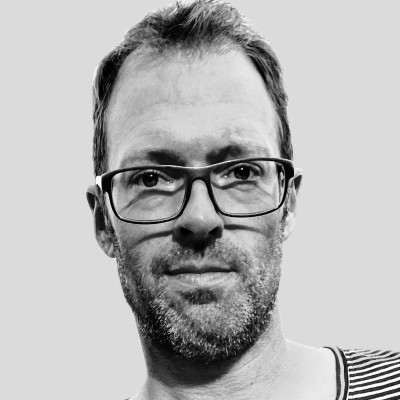
Matthias Greuet, Project Director
Chabanne
By the end of the weekend, the decision is essentially made: not for him yet, he doesn't have a project. For Rémi Relave, the construction manager running the Enedis Eco-Campus project, whose weekly meeting was still running on Excel.
there, he lays the foundation
Matthias does the setup himself: template, chapters, structure. "I'm the one who built the template, but Rémi was the one in the trenches." Rémi tests it in real conditions, reports back what he sees. Matthias adjusts.
During that period, he fills in for Rémi on the Enedis project a few times. The active Excel report he had access to wasn't current.
He already had there in his head. The gap was unbearable. "Once you've gotten one foot out the door of hell, the minutes feel long before you can get the second one out."
there, the office changes
Office time gets cut in half. On Enedis: from 4–6 hours down to 2–3 hours after the meeting. On a standard project: from 2 hours down to 1.
Writing in the meeting improves. On Excel, adding a line mid-meeting — right-click, insert, check the position — took longer than pulling out a notebook. So you took notes by hand and caught up in the evening. With there, "the little box with the plus button for a new item: that's 3.5 seconds saved, multiplied by I don't even know how many times."
"Create next report" handles the continuity work — automatic numbering, carry-forward of open items, completed items archived. "It's just magic. It does exactly what I need, without me doing anything." The blue stripe flags new items at a glance: a feature Matthias requested, shipped in 48 hours.
there, the hard-to-reach actually get reached
"The façade contractor running eighteen jobs at once — he's got his phone and nothing else. He doesn't have time to read meeting reports. Except maybe while he's waiting his turn in one of his many meetings. He tries to zoom into the PDF on his phone: it's unreadable. With this, it actually works."
Across thirty to forty recipients per report, that's not a small thing. The tool doesn't change their behavior by magic. It removes the main obstacle.
there, everything is on record
"The meeting report is essentially our only deliverable in the construction phase, the only contractual document. You have a claim, the insurer asks for it. You have a dispute in court, they go back through every single one."
A document sent too late, incomplete, or poorly written for lack of time: that's not an organizational problem. But it is exposure. "Penalties, progress milestones, delays, technical decisions — all of it is tracked in the meeting reports." When the tool frees up bandwidth, you take the time you didn't have to do it better. "I spent 10 minutes this morning wrestling with a sensitive, slightly contentious section of my report. Now I have that time."
there, everyone gets on board at their own pace
Thomas switched to there mid-project. Felix — the one who forwarded the email — is waiting until his current project wraps before making the move. Stéphane Fabre, the director of construction operations, and Olivier in Lyon haven't made the switch yet. They're not holdouts. "They're absolute workhorses — an incredible capacity for work." But when you're running at 110%, it's hard to tell yourself this is the right moment to change your habits. "When a project ends and the load drops, that's when you can take the time. The moment will come. And I'm pretty sure they'll be sold once they see it in action — and won't look back."
”There's someone on the other end”
Three features requested, three features shipped: the blue stripe, task archiving, the "+" button on task lines. "When you say 'it'd just need this one thing,' and the answer is 'hang tight, we'll get it to you' — that's it. That's the relationship."
He compares it with his experience with other vendors: "I could have made that kind of request a year ago somewhere else, and I think I'd still be waiting." With there: "There's someone on the other end."
With other vendors, “I could have made that kind of request a year ago somewhere else, and I think I'd still be waiting.” With there: “There's someone on the other end.”
there, his own project
Saint-Omer. A hospital. Major trade packages.
"I explained in the kickoff meeting that we were working with this new tool. My owner's rep and the contractor running the shell-and-core package were immediately all eyes and ears — the curiosity and interest were instant."
He still distributes the PDF alongside it, to make sure no one gets left behind. He was skeptical about the read receipt feature. "My first reaction was, 'yeah, whatever.'" Then he sent his first report from there. "In the two hours that followed, I couldn't stop checking who had read it. Not to keep tabs — but to know who to call and follow up with before the next meeting."
there, it goes from here
Matthias has a few more emails headed our way in the coming weeks. Not complaints. Ideas.
Planned headcount in the quantity field. Right now: reported headcount. He wants a target column — a number or a free-form note like "needs reinforcing" — to log the observation without telling the contractor what to do.
Formal delivery tracking through there. He still doubles up with an email and a PDF attachment, because he's not confident enough yet in the legal standing of there's automatic send in a dispute. "The day that gets settled, I won't be doubling up anymore. More time saved."
Compact mode. there's highly readable format pushes page count up — a psychological friction point for recipients still on PDF. "On Archipad you could choose photo size, for instance. Could you offer a compact mode? Once everyone moves to the web version, it won't matter. But as long as there's PDF, it will."
Contact sync. "On Archipad, someone handed me a business card on site, I scanned it into the tool, and it synced to my phone in one move. They'd take their card back, and I was already up to date everywhere." That fluidity is missing.
About Chabanne
Chabanne is an architecture and engineering firm founded in Lyon, bringing ten disciplines under one roof: architecture, construction management, cost consulting, BIM management, structural engineering, MEP, façade, landscape, and energy. With over 300 completed projects and four offices — Lyon, Paris, Marseille, and Saint-Étienne — it leads complex programs in healthcare, industrial campuses, and sports facilities, where multi-trade coordination is a central challenge.

