COSECANTE
Works Supervision Consultant

÷2
Time to write each report
10s
Per photo
48hr
Contractual distribution
Switch
December 2025
Previous tools
OneNote, paper notebooks and Word
Usage
All 5 ongoing projects
Outcomes
Keep pace across 3 to 5 projects
A shared standard across offices and staff
Stronger image with owners who compare
Adrien Benier, Managing Director / Partner
Corentin Le Gars, Deputy Managing Director / Partner, Cosécante
At Cosécante, the work is intellectual. It's invisible — not like a mason building a wall. It shows up in the job site meeting report the owner receives every week and compares to the last CA's.
there, the work leaves only one trace
Cosécante was founded in April 2022, built on more than a decade running and directing construction in major general contracting firms. Based in Paris and Nantes, the firm covers construction administration, scheduling and coordination, project management, owner's rep, and engineering.
On the ground, though, all of that often comes down to a single visible artifact: the job site meeting report.
Not because it's the only work being done. Because it's the only thing everyone receives. The trade contractors. The owner. Sometimes an expert, months later.
Adrien puts it plainly: "The job site meeting report may be one of the only documents we can distribute to an owner that carries contractual weight."
Cosécante has taken over several projects mid-stream from construction administrators who were replaced. When they arrive, the first document the client shows them is often the last meeting report.
“I replaced a CA firm they had in-house. They showed their meeting reports - an Excel file, visually awful, you couldn't make sense of anything. They were embarrassed, frankly.”
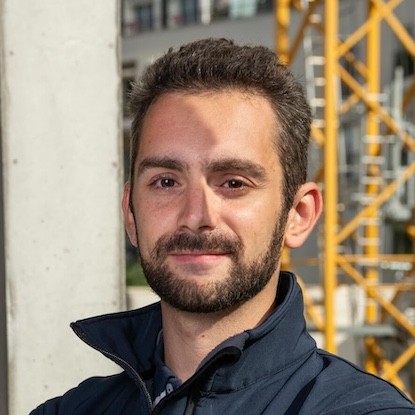
Adrien Benier
Managing Director / Partner
The meeting report doesn't just track the job. It also says something about the firm that produces it.
there, two different methods both ended up in Word
Before there, Adrien and Corentin didn't share the same practice. They shared the same problem.
Adrien used OneNote. One project, tabs, meetings. And a search function that let him track down a topic from months earlier — a window installed too soon, a bid rejected, a decision that never got followed up. But OneNote wasn't the deliverable. After every meeting, he had to re-formalize everything in Word. Photos taken on site were emailed. Then retrieved into the document. One by one. Resized.
Corentin kept a notebook. One per project. He liked it for a simple reason: staying present with the room during meetings, no screen between him and the table. But the notebook also ended up in Word.
Two different methods. The same double-entry. The same fatigue behind it.
“A topic didn't leave my notebook until I'd typed it out on paper.”
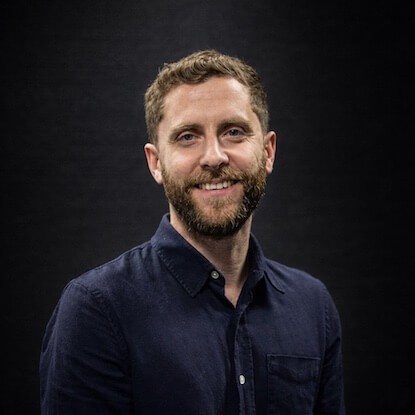
Corentin Le Gars
Deputy Managing Director / Partner, Cosécante
there, the real problem was memory
The strongest part of the Cosécante story isn't Word. It's not even the time.
It's memory.
In construction administration, they're not running a single project start to finish the way a general contractor does. They're juggling three, four, five projects at radically different phases simultaneously — bidding, demolition, structural, closeout, final accounting. All at once.
In that rhythm, the job site meeting report does far more than distribute a decision. It holds the thread when everything overlaps. It proves what was said. It reminds a trade contractor that a topic was already settled three weeks ago. It protects you when the owner is slow to make a call.
It's not an output document. It's the project's working memory.
And for that, full-text search in your notes isn't a convenience. It's a professional necessity.
there, Toolkit made the connection
trigger wasn't an abstract benchmark. It came from Pierre-Marie Nigay, founder of Toolkit.
Cosécante was already using Toolkit in the field — construction scheduling, punch list tracking, progress. Toolkit sees the project move. there picks up where it needs to produce the document that circulates. Between the two, an integration: a schedule task can become an action item in the meeting report. Operational tracking on one side. Contractual record on the other.
Corentin had already seen there.do on LinkedIn. But what mattered in that moment wasn't novelty. It was a need that had become clear: find a common tool across both partners, all staff, Paris and Nantes.
“We wanted one shared baseline across both offices.”
Corentin Le Gars
Partner, Cosécante
there, the switch wasn't about AI
What made them switch wasn't a promise of artificial intelligence.
It was far more concrete. The "Create a follow-up" feature. The quality of the output. Reading on a phone. And above all: the photos.
Adrien kept one project in Word in parallel, just to compare. The verdict came down to one simple thing: progress photos. Before, four or five maximum per report. Not for lack of photos. For lack of wanting to fight with Word.
“I spent at least 5 to 10 minutes just on the image portion. Versus 10 seconds in there.”
Adrien Benier
Managing Director / Partner
In there, he drops the photo in. That's it. And because trade contractors read reports on their phones, the difference shows on the receiving end too — the image opens, zooms, stays readable. No more A4 PDF that someone's trying to pinch-zoom in a hallway.
“When you receive a meeting report in Excel, you realize that the firm hasn't moved to the next level.”
Corentin Le Gars
Partner, Cosécante
there, the report started living inside the week
The time savings are real. Both partners cite writing time cut in half.
Before: an hour to an hour and a half.
After: thirty to forty-five minutes.
But the more interesting shift is elsewhere.
Corentin no longer "does" the report as a separate block. As soon as a meeting wraps, he creates a follow-up. Then during the week, when something comes in by email or a decision needs to be logged, he adds it directly. Two minutes here. Two minutes there.
By the end, the report isn't a chore to rebuild from scratch. It's already the thread of the project.
“When I say half an hour, some of that time comes earlier in the week. But it's so spread out it doesn't register as time spent.”
The document stops arriving after the job. It travels with the job.
there, two offices finally speak the same language
The most structurally important benefit may be neither time nor photos. It's the standard.
Paris. Nantes. The partners. The staff. The trade contractors who work with them across multiple projects.
"They don't always have the same point of contact — but they get the same report."
This matters especially because the firm is still young. The document becomes a way to establish a house standard without writing a procedures manual.
Corentin has pushed the practice into project kickoff meetings: he projects the report, shows the drawings large, presents the project — and at the same time introduces how the trade contractors will receive their meeting reports going forward. The report no longer just records. It sets the framework from day one.
The feature requests coming back are telling: full-text search in notes, to find old topics the way OneNote could; better redistribution of action items by relevant trade, to avoid copying and pasting between sections. And already part of daily use: the table of contents, photo annotations, references by report number.
there, it keeps going
Their posture on AI is the same as on there. No gadgets. One simple filter: does this save time or not?
They've just moved to Claude Cowork to analyze bid package documents. They see the same shift coming: two ways of working are going to coexist. Those who keep the old workflow. And those who use the new tools to absorb more without losing the thread.
Corentin's take is direct:
“We'll be able to take on a sixth project.”
About Cosécante
Cosécante was founded in April 2022, with offices in the Paris region and Nantes. The firm covers construction administration and engineering services: CA, scheduling and coordination, project management, owner's rep, and engineering consulting. Ten staff. Fifteen active construction projects. Thirty active clients. Two offices in France.